Why Acoustics Matter More Than People Think
Modern Australian homes are increasingly built with hard surfaces — polished concrete floors, large glass windows, minimal soft furnishings, and open-plan layouts that span kitchens, dining, and living areas without division. Every one of these surfaces reflects sound rather than absorbing it.
The result is reverberation — sound bouncing around a room and arriving at your ears slightly delayed and from multiple directions. You experience this as a "muddiness" that makes conversation tiring, music feel flat, and TV audio hard to follow without turning the volume up.
Absorption vs. Soundproofing — Know the Difference
This is one of the most common misconceptions in acoustic treatment. Our PET panels are sound absorbers, not soundproofers. Understanding the distinction helps you use them correctly:
- Sound absorption — reduces echo, reverberation, and noise level within a room by converting sound energy into heat as it passes through the panel fibres. This is what acoustic panels do.
- Soundproofing — prevents sound from travelling between rooms or through walls. This requires mass (heavy materials, double walls, decoupled construction) and is a structural solution, not a panel solution.
If you want your home theatre to sound cleaner, your office to be less noisy, or your restaurant to feel less chaotic — acoustic panels are the right tool. If you need to prevent sound from escaping a music studio into a bedroom — that's a soundproofing project.
The Science Behind NRC Ratings
Our PET acoustic panels carry an NRC (Noise Reduction Coefficient) rating of up to 0.95. Here's what that means in plain terms: an NRC of 0.95 means the panel absorbs 95% of incident sound energy and reflects only 5%. Compare that to a plasterboard wall (NRC ~0.05) or carpet (NRC ~0.35) — acoustic panels are dramatically more effective.
Rule of thumb: Covering 20–30% of a room's wall and ceiling surface area with acoustic panels delivers a substantial, noticeable improvement in acoustic comfort for most residential applications.
Where to Use Acoustic Panels
Home Theatres
The most impactful application. In a dedicated home theatre, you want sound to come cleanly from the speakers — not from reflections off the ceiling, side walls, and rear wall. Panels on the side walls at the primary reflection points, on the rear wall, and on the ceiling above the listening position will dramatically improve dialogue clarity, soundstage imaging, and overall audio quality.
Open-Plan Living
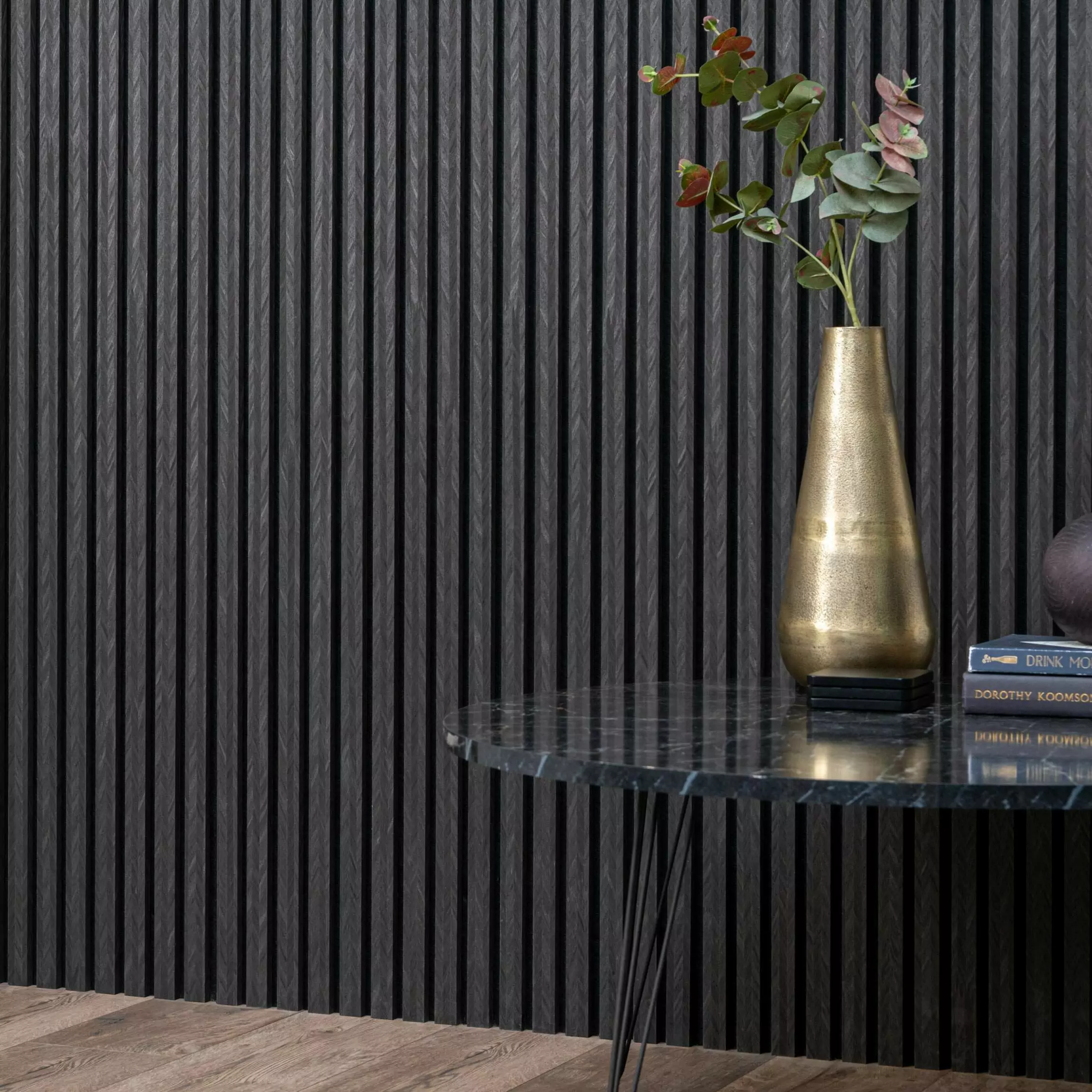
Open-plan kitchens and living areas are acoustically challenging because the large, connected volume allows sound to travel and build up continuously. A feature wall of acoustic panels — which doubles as a design statement — can reduce the ambient noise level significantly, making conversation easier and the space more comfortable for longer periods.
Home Offices
Since the shift to remote work, home offices have become a priority for acoustic treatment. Video call audio quality improves dramatically with acoustic panels behind and around you — reducing the room echo that makes you sound like you're calling from a bathroom. Your concentration also improves when the ambient noise floor in your workspace is lower.
Restaurants and Hospitality
High ceilings, hard floors, and full rooms create the acoustic chaos that makes many restaurants genuinely unpleasant to have a conversation in. Strategic placement of acoustic panels — often integrated into feature wall designs — is now standard practice in hospitality fit-outs.
Why PET Fibre Is the Right Material
Our panels are made from 100% recycled PET fibre — the same material as recycled plastic bottles. Compared to other acoustic materials like foam or fibreglass, PET panels offer several advantages:
- No harmful fibres or off-gassing — safe for residential use
- Durable and resistant to impact, moisture, and humidity
- Available in a wide range of colours — genuinely decorative
- Lightweight and easy to install with adhesive or Z-clips
- Eco-friendly — made from post-consumer recycled plastic
Installation Tips
PET acoustic panels can be installed directly onto plasterboard, timber framing, or most wall surfaces. For temporary or renter-friendly installations, Z-clip systems allow the panels to be hung and removed without permanent fixings. For permanent installations, construction adhesive provides a clean, flush result.
Panels should be positioned at reflection points for maximum acoustic effect — typically one-third of the way along side walls at ear height, on the ceiling above the listening or working position, and on the rear wall of any dedicated audio space.