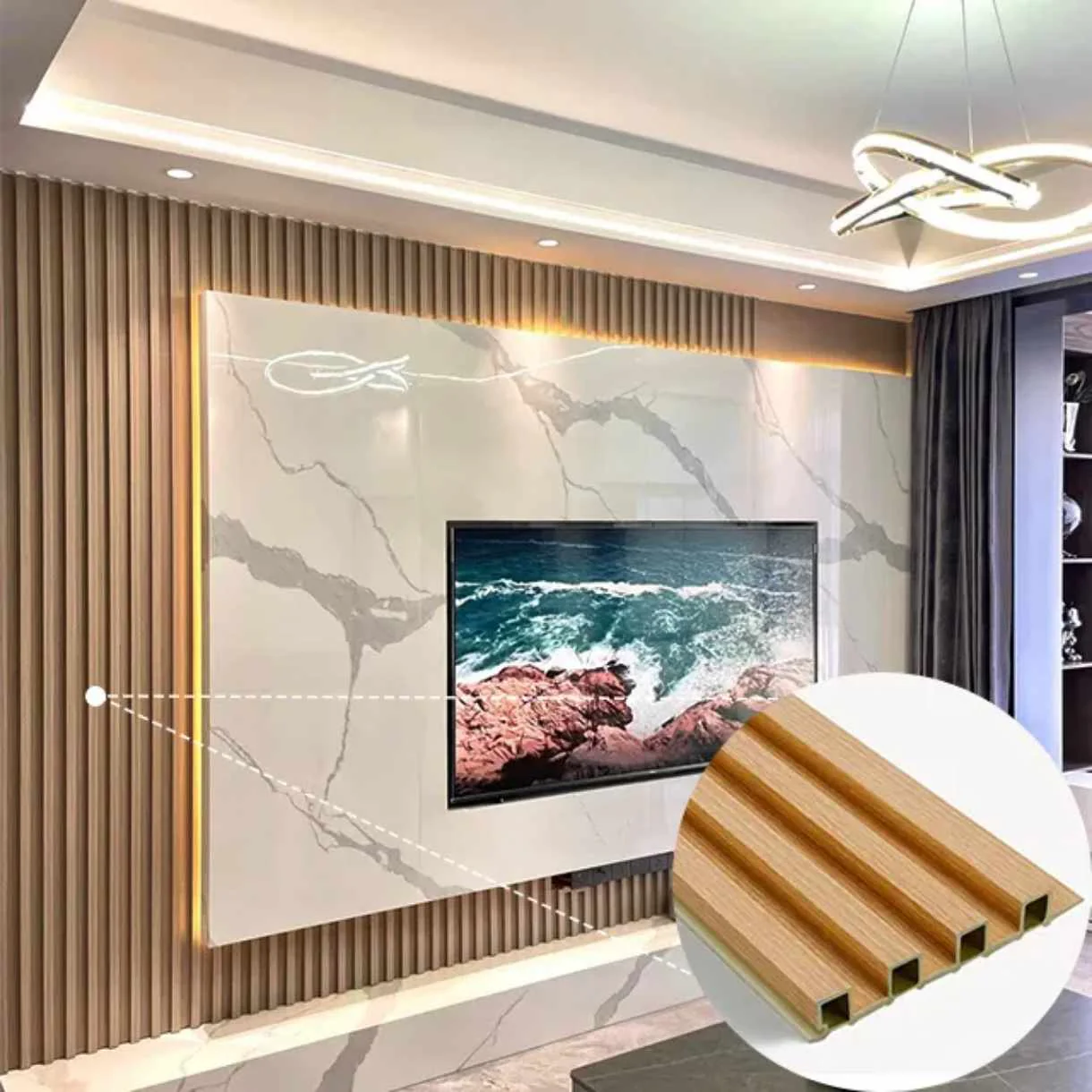
What Is WPC Wall Cladding?
WPC stands for Wood Plastic Composite — a manufactured board material made from a blend of wood fibre (typically 50–70%) and thermoplastic polymer (usually PVC or polyethylene). The two materials are combined under heat and pressure to create a panel that looks and feels like timber but behaves like engineered plastic.
The result is a surface that replicates the grain, texture and warmth of natural timber while being impervious to the conditions that cause real timber to fail in Australian homes — moisture, humidity, insects, and UV exposure. For a wall cladding product, that combination is essentially ideal.
WPC wall panels typically come in tongue-and-groove or click-lock systems that install directly onto battens or stud frames, without adhesive, allowing for clean, professional results without trade experience.
WPC vs Real Timber — The Australian Home Reality
Timber feature walls are beautiful when well-maintained. The issue is that in Australian homes — particularly in bathrooms, laundries, alfresco areas, and open-plan kitchens — timber faces conditions it's not engineered to handle well over the long term.
- Moisture — real timber expands and contracts with humidity changes, causing gaps, warping, and eventually structural failure in high-moisture areas like bathrooms
- Termites — a persistent threat in many parts of Victoria and across Australia. WPC contains no cellulose, so it holds no appeal for termites whatsoever
- Maintenance — real timber requires periodic sanding, oiling or staining. WPC is wipe-clean and requires no ongoing treatment
- Cost — quality hardwood cladding is expensive. WPC delivers a comparable visual result at significantly lower material and labour cost
- Consistency — natural timber varies. WPC delivers a uniform, consistent finish across a large surface area without knots, colour variation, or defects
Key distinction: WPC is not a substitute for timber in structural applications — it's a cladding and surfacing product. Used as wall panels, feature wall cladding, or ceiling linings, it outperforms real timber in almost every practical way.
Indoor Applications — Where WPC Works Best
Living Room Feature Walls
The most common application. A full-height WPC feature wall behind a sofa or entertainment unit creates a focal point that transforms a living space. The vertical slat profile is particularly popular — it adds height, visual rhythm, and depth that painted plasterboard simply cannot replicate. Charcoal, walnut, and grey-washed finishes are consistently popular for contemporary Australian interiors.
Bathrooms and Ensuites
This is where WPC distinguishes itself most clearly from real timber. The moisture resistance of WPC makes it genuinely suitable for bathroom walls — including wet areas with appropriate sealing at joins. We've installed WPC bathroom cladding throughout Melbourne's western suburbs as a cost-effective, low-maintenance alternative to tiles that also delivers a warmer, more inviting aesthetic.
Kitchen Feature Walls and Splashbacks
WPC wall panels used as kitchen splashbacks or feature walls behind island benches create a distinctive look that sets a kitchen apart. The panels are heat resistant and easy to wipe clean — practical requirements for a kitchen surface that many other wall panel materials fail to meet.
Commercial and Hospitality Fit-outs
Restaurants, cafes, hotels and offices across Melbourne increasingly use WPC wall cladding for feature walls, ceiling panels, and partition cladding. The commercial-grade durability, easy maintenance, and wide finish range make WPC a practical and attractive choice for high-traffic environments.
Outdoor and Alfresco Cladding
Many WPC wall panel systems are engineered for outdoor use as well — suitable for alfresco areas, pergolas, carport walls, and even building facades. Exterior-grade WPC contains UV stabilisers that prevent colour fade and surface degradation under Australian sun exposure, and the inherent moisture resistance makes it ideal for covered outdoor spaces that see occasional rain splash.
If you're fitting out an alfresco entertaining area and want a continuous aesthetic from inside to outside, WPC cladding on the alfresco walls creates that seamless transition — something that tiles or painted surfaces can't achieve as naturally.
Installation — What to Expect
WPC wall panels install onto a batten system fixed to the existing wall. The battens create a small air cavity behind the panels, which also provides a convenient channel for running any electrical cabling. Panels then click or tongue-and-groove together along the wall run, with cover trims at top, bottom and corners for a clean finish.
The process is cleaner and faster than tiling, and unlike painted surfaces, there's no drying time and no skill required to achieve a professional finish. Most rooms can be fully clad in a day by an experienced installer.
Smart Surface Solutions handles full supply and installation across Melbourne. If you're a confident DIYer, we can also supply materials and panels only — our team is happy to walk you through the process.
Choosing Your Finish
Our WPC wall panel range includes a wide selection of finishes — from light oak and blonde timber tones through to deep walnut, charcoal, and weathered grey. The two most popular profile styles are:
- Slat panels — vertical or horizontal slats with a shadow reveal between each board, creating a strong linear rhythm. Particularly effective for feature walls and alfresco spaces
- Flush cladding — boards that sit tightly together for a smooth, continuous timber surface. Better for bathroom cladding and applications where a seamless look is preferred
Not sure which finish is right for your space? Visit our Melton showroom where we have full-size samples of our WPC wall panel range on display, or contact us and we can discuss your project.